Will Taylor
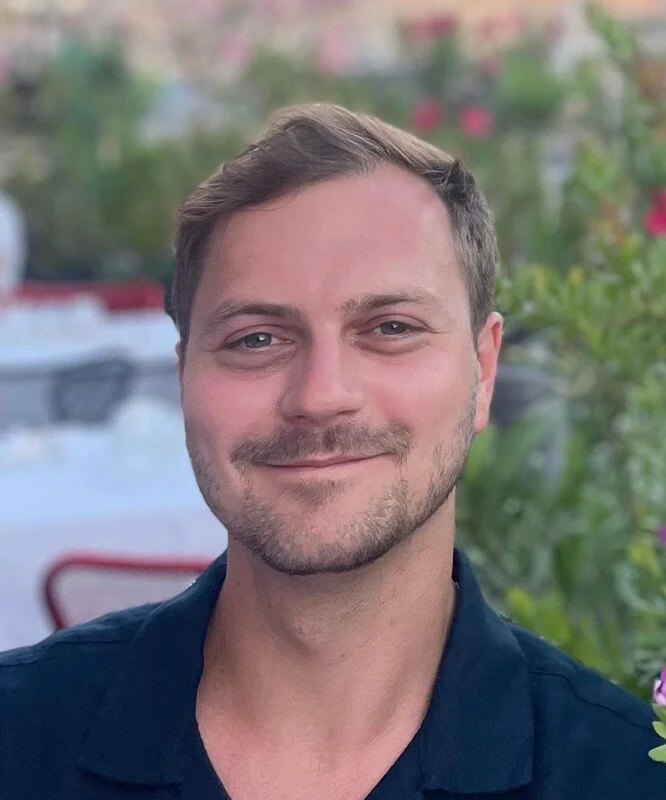
Will Taylor.
Will Taylor
Will Taylor is a filmmaker with an interest in the impact of food banks on UK society. With the creative agency, Glass Eye, in London he has produced an animated short that surfaces the voices and experiences of people using food banks and those who work and volunteer.
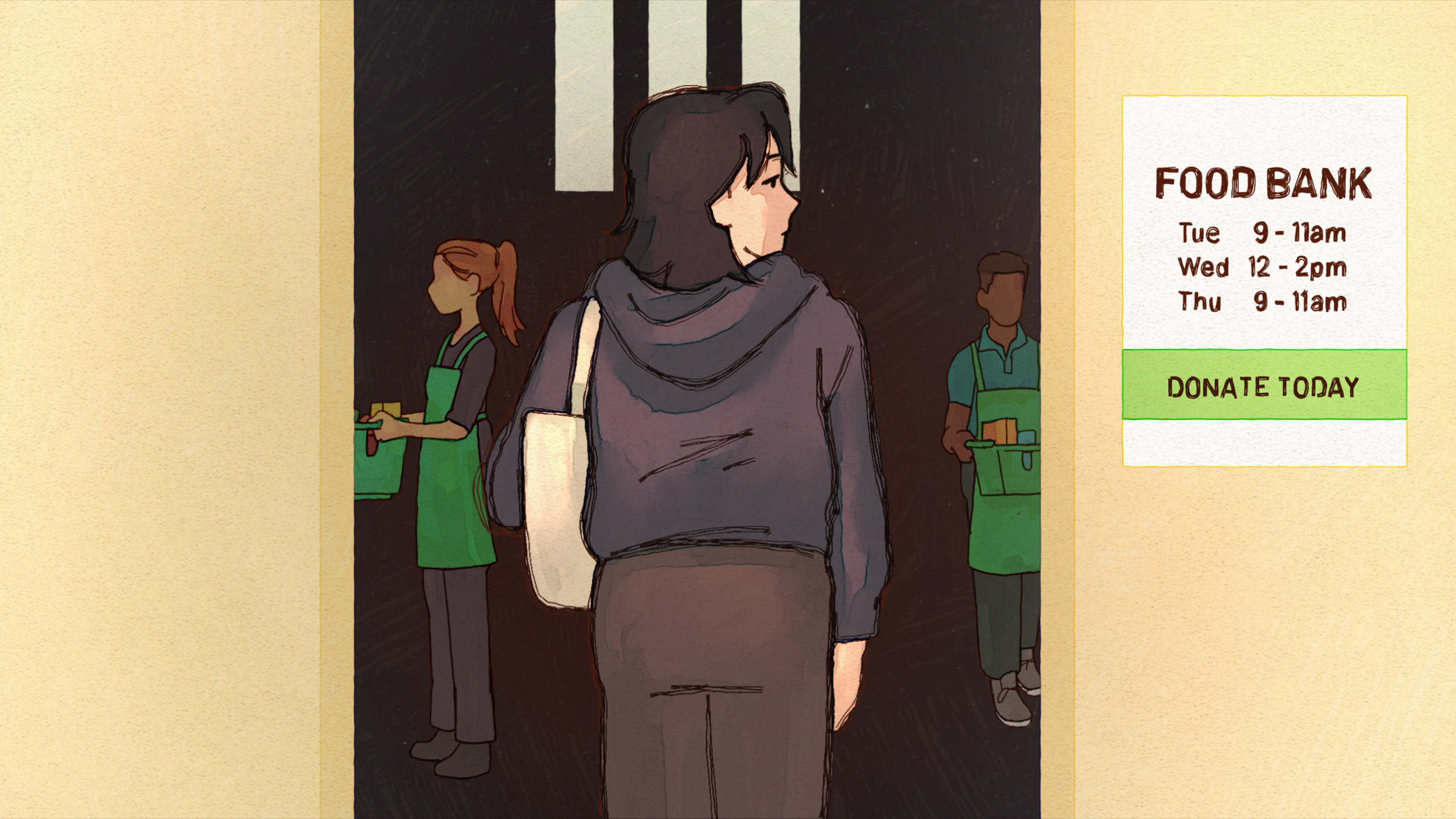
A still from the animated film, Crunch Point.
Q & A Will Taylor
Tell us a bit about yourself.
I’m 30 years old and live in North London with my partner. I’m Head of Production for a creative agency, Glass Eye, that specialise in producing marketing content for film and TV. When it comes to viewing documentaries and factual content I have been in my happy place since I was young.
Tell us a bit about the film. What inspired it?
The film is a short (11 minute) documentary. Using hand-drawn animation, it explores the stories and experiences of people in the UK supported by food banks. They tell us, in their own words, what led them to needing this support and how they felt about seeking it. We also hear from two people working in food banks who give their opinions about food banks and food insecurity in the UK. The film was inspired by the simple fact that I knew food banks, and therefore food poverty more generally, existed in the UK. But, I realised I actually knew nothing about how they worked. I also wanted to bring a bit more humanity back to the conversations that were being had, and let people supported by food banks tell their own stories about how they got to this point.
Why choose animation to tell this story?
Animation felt like the right tool for a few different reasons. One of those reasons was that we wanted to be able to preserve the anonymity of our interviewees, so that they could share their stories with us without being immediately identifiable to anyone who watched the film. It also felt like it somewhat removed the natural human tendency to judge a person and their experiences from the way they look. Essentially, the animation allowed us to bring these stories and experiences to life.
What are the key messages you are hoping to get across?
The main thing I’d like people to take away is that every person who needs support from a food bank is a real human being with a different story. The numbers of people needing this support are staggering and each of those people is literally struggling to feed themselves or their families. People don’t want to be relying on food banks in order to eat. In the long-term we need serious government action to address the underlying causes that lead to this, and I hope that people will start calling for this.
Did you learn anything surprising or shocking in the process?
It was definitely a nasty surprise to find out how easily people can end up relying on a food bank. Many people working have to use them because their wages don’t cover all their essential living costs. The other shocking thing is the fact that Universal Credit has been shown by research to not be enough to cover these same essential living costs. People often don’t know how close they are to needing support from a food bank until they are hit with a major setback.
What were the main points people raised when you spoke with them?
One of the big issues comes from the way that food banks have often been presented by the media. The overriding feeling when talking to people at food banks was that of being misunderstood and not being heard. I think there’s a perception that it must be your fault if you’re having to use a food bank. Unfortunately, this is an idea that has been perpetuated by certain politicians and media outlets. I think people just want some humanity shown towards them and a recognition that this isn’t necessarily their fault.
What sort of solutions did they suggest to the food bank phenomenon?
Most people familiar with food banks recognise that increasing Universal Credit and increasing minimum wage levels are the most immediate ways that the government can help rectify the situation we’re in.
Was stigma a worry for people you spoke to?
Everyone we spoke to had felt worried, ashamed or anxious about going to a food bank. It’s worth noting that the brilliant people who work at food banks and similar organisations do an amazing job of making people feel welcome and comfortable. But the bottom line is that people feel like they have failed themselves or their family by going there. Our lived experienced interviewees in the film all talk about how stigma manifested for them personally, which I think is deeply moving and hopefully does encourage people to empathise.
Who are your primary audiences?
The general public, though I know that is very broad! But I think generally people in the UK who don’t have experience with food banks, food insecurity and poverty need to understand what other people are going through. I think if people see beyond the stats and the data and can connect with a film like ours that presents real human experience then that can lead to more empathy and, hopefully, more action. We also want this to reach people who can influence policy and public opinion, so journalists, politicians, activists, etc. Finally, we want to change the opinions of those who actively hold negative views and opinions about people who rely on food banks.
If you could spend a half hour with the PM, what would you tell him?
If focusing on food banks and food insecurity specifically, I think I’d just encourage him not only to look at the horrifying statistics around food insecurity and food bank use in the UK, but to go to food banks and talk to people experiencing this first-hand. In my personal experience, the problem becomes a lot harder to turn your back on when you have made personal connections with the real people who are struggling.
WHAT CAN PEOPLE DO TO SUPPORT YOUR FILM AND WORK ON FOOD BANKS?
We have a website alongside the film, which contains a draft email to send to your local MP to ask them what they’re doing, and what they plan to do, to combat food poverty and food insecurity. It would be great to build some momentum with that and show the government that people want this resolved!